
What Is an A-Line Dress & How Do You Style Them?
Of all the wardrobe staples, few styles are as universally flattering as the A-line dress. With its gently flared skirt and timeless shape, the A-line dress is an iconic silhouette that embraces structure and femininity. Whether you’re going out for brunch, preparing for a day at work, or getting ready for an evening out, this classic piece adapts beautifully in nearly every setting.
What makes the A-line dress truly stand out is its versatility. Available in everything from breezy cottons and structured knits to luxe satins and seasonal prints, A-line dresses can be styled up or down with ease. It’s the kind of dress that looks effortless for every occasion.
In this guide, we’ll explore everything you need to know about A-line dresses. Ready to fall in love with this classic cut? Read on to discover why it flatters so many figures and how to wear it with confidence.
What Is an A-Line Dress?
The Evolution of A-Line Style: From Dior to Today
Why A-Line Dresses Are Universally Flattering
How Should an A-Line Dress Fit?
How Do A-Line Dresses Compare to Other Dress Styles?
Fabric Choices and Embellishments for A-Line Clothing
Comparing the Different Lengths of A-Line Dresses: Mini vs. Midi vs Maxi
Styling A-Line Dresses for Every Occasion
Accessories That Complement A-Line Dresses
Introduce the A-Line to Your Style Rotation
What Is an A-Line Dress?
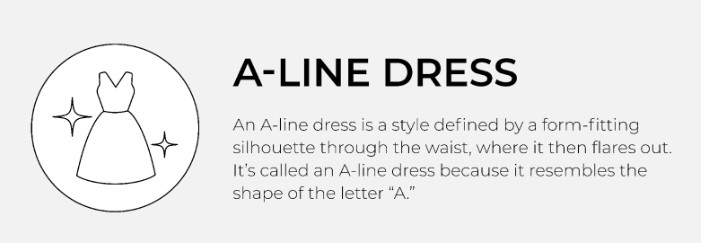
An A-line dress is a dress style featuring a fitted top that flares out from the waist, forming a gentle “A” shape. It offers structure without being restrictive. The flared skirt provides movement and comfort, while the fitted bodice accentuates your natural waist. Key characteristics include:
Fitted bodice. Hugs the shoulders, chest, and waist snugly, providing shape and structure at the top.
Gradual flare. The skirt widens smoothly from the waist or hips downward, creating the triangular silhouette the style is named for.
No cling at the hips. Unlike bodycon or sheath styles, the A-line skims over the lower body without hugging it.
Structured hem. The triangular shape is maintained whether the hem falls at the mini, midi, or maxi length.
A-line dresses come in countless variations, such as classic, empire, princess seam, and trapeze.
Classic A-line: Cinches exactly at the natural waistline before flaring out, making it the most recognizable version of the silhouette.
Empire: Empire A-line styles raise the waistline to just below the bust, creating an elongated, flowing shape.
Princess seam: These designs use vertical seams running from the shoulder to the hem to add structure and subtle shaping.
Trapeze styles: Flare directly from the shoulders without any defined waist at all, offering a looser, more modern take on the A-line shape.
Whether you’re dressing for a casual afternoon or a special occasion, the clean lines and balanced proportions make it a go-to choice for women of all shapes and sizes. With classic charm and modern adaptability, the A-line dress is a staple for any season or setting.
The Evolution of A-Line Style: From Dior to Today
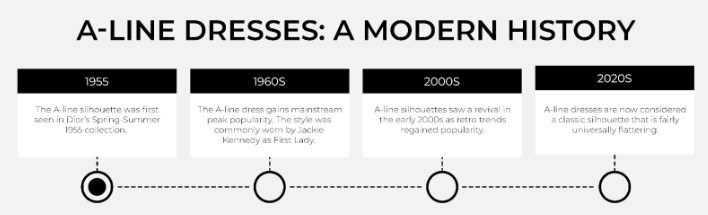
To truly appreciate the timeless appeal of the A-line silhouette, let’s take a look back at fashion history. In the 1950s, the A-line style hit the scene when legendary designer Christian Dior introduced the “Ligne A” in his 1955 spring collection. These designs marked a departure from the heavily structured shapes of earlier decades.
Just a few years later, Yves Saint Laurent further cemented the A-line’s place in fashion with the launch of his 1958 “Trapeze” collection. These gently flared knee-length dresses exuded sophistication while celebrating freedom of movement.
What is an A-line dress style today? While it remains rooted in its classic shape, the modern A-line has evolved to reflect contemporary flair. Today’s versions range from crisp and tailored to soft and romantic.
Why A-Line Dresses Are Universally Flattering
The A-line dress flatters nearly every body type thanks to its balanced silhouette. With a fitted bodice and a skirt that gently flares from the waist, it accentuates curves while skimming over hips and thighs for a smooth, elegant look.
Body Shape | Shape Details | Why an A-Line Dress Works |
Pear | Wider hips and thighs | The fitted top draws attention upward while the flared skirt flows over the hips without clinging, creating a beautifully balanced proportion. |
Hourglass | Balanced bust and hips with a defined waist | The A-line follows the natural waist and flares gently without adding excess volume. A cinched-waist or tie-waist style enhances definition further. |
Apple | Fuller midsection | A-line dresses with an empire waist or soft fabric that falls from below the bust are especially flattering, gently skimming over the midsection while still creating shape. |
Straight or rectangular | Less defined waist | A-line styles with ruching, gathering, or a defined waistband add the illusion of curves and create a more feminine silhouette for straighter figures.
|
This style works for a wide range of women, adding shape to straighter figures and balancing proportions for curvier ones. It's a go-to for its comfort, ease of movement, and timeless appeal, making it a favorite across sizes and ages. Whether you're dressing up or keeping it casual, the A-line offers a flattering, fuss-free fit that always feels right.
When shopping for an A-line dress for your body type, consider design details that might draw attention to what you want to highlight–like a tie waist–or those that help minimize parts of your body you don’t want on display–like pleating or ruching.
How Should an A-Line Dress Fit?
A well-fitting A-line dress should feel structured at the top and relaxed toward the hem. At the shoulders, the seams should sit right at the edge of each shoulder blade—not drooping down the arm or pulling inward toward the neck. The bust should lie flat and smooth without any gaping at the neckline or pulling across the chest. At the waist, an A-line dress should follow your natural curve without constricting movement. Some A-line styles include a defined waistband, belt loops, or a seam at the natural waist that indicates exactly where the flare begins. If the dress cinches slightly here, it should do so comfortably. You should be able to breathe and move freely. From the hips downward, the skirt should fall away cleanly. There should be no bunching, pulling, or fabric straining across the hips or thighs. The silhouette should flare gently and evenly on all sides. For most body types, this means the skirt begins to widen just below the waist seam, creating that signature triangular drape. A properly fitting A-line dress will graze the body at the bust and waist while allowing easy movement through the hips, thighs, and legs.
How Do A-Line Dresses Compare to Other Dress Styles?
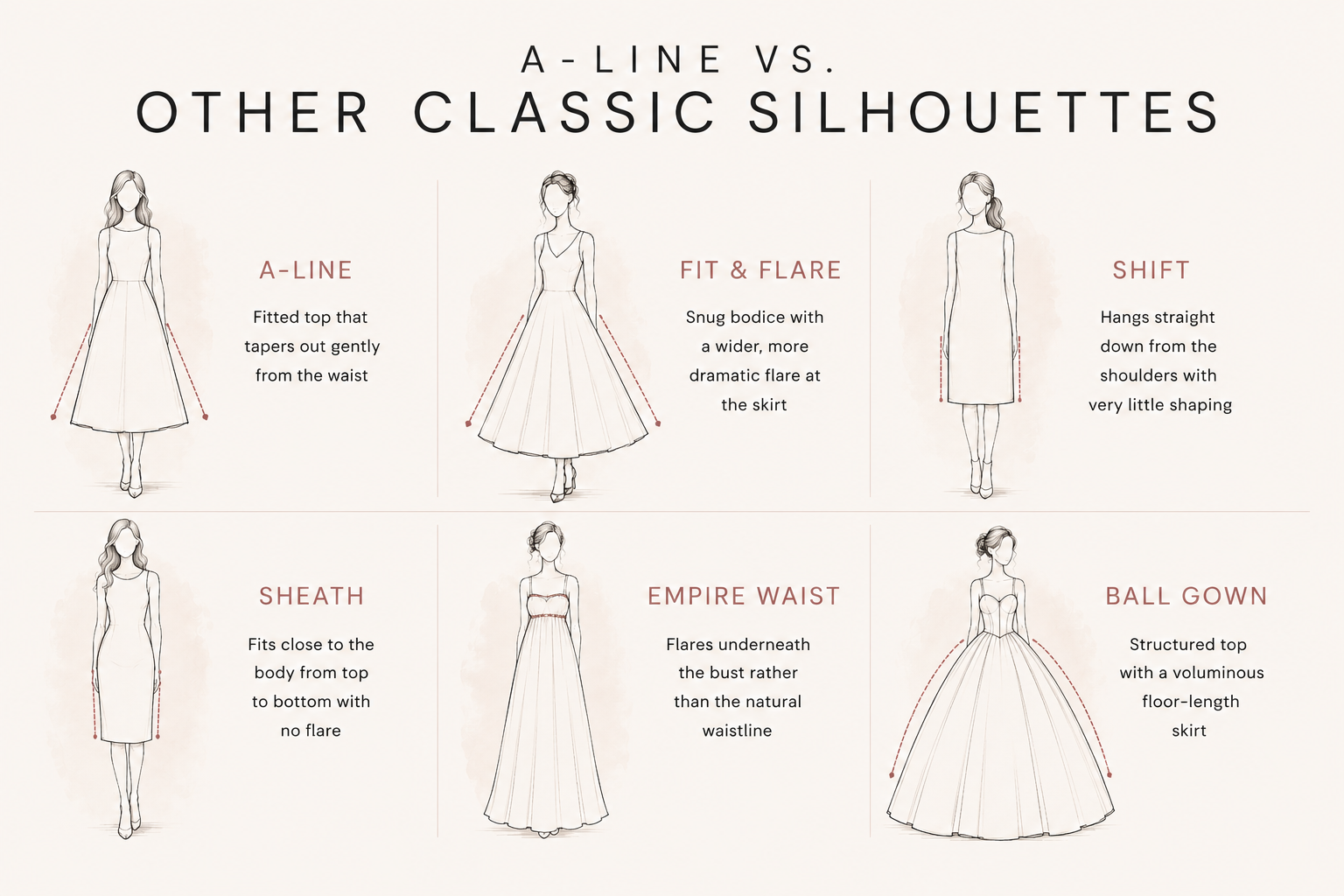
The A-line is often confused with similar silhouettes. Here’s how it differs from the styles you’re most likely to compare it to.
A-line vs. Fit and flare
A fit-and-flare dress and an A-line are close cousins, but the flare on a fit-and-flare is typically more dramatic, beginning at or just above the natural waist and fanning out significantly, often with petticoat support. An A-line, by contrast, has a gentler, more gradual flare and a cleaner overall line. A-lines tend to be more versatile for work and everyday wear, while fit-and-flare styles lean more festive or retro.
A-line vs. Shift dress
A shift dress hangs straight from the shoulders with minimal shaping at the bust or waist. It creates a boxy, relaxed column silhouette rather than a triangular one. An A-line, by comparison, has a fitted bodice and a defined waist before it flares, giving it more structure and a more traditionally feminine shape. Shift dresses are sleeker and more minimalist; A-lines are more classic and figure-conscious.
A-line vs. Sheath dress
A sheath dress fits closely to the body from the shoulders to the hem with little to no flare. It’s the tailored, pencil-like option in most professional wardrobes. An A-line is the opposite in silhouette. While both styles have structured bodices, the A-line opens up through the skirt, offering far more comfort and ease of movement.
A-line vs. Empire waist
Empire waist dresses raise the waist seam to just below the bust, causing the skirt to flow down from there rather than from the natural waist. An A-line can incorporate an empire waist, but a standard A-line cinches at the natural waist. Empire waist styles are particularly popular for maternity wear and flowy, romantic aesthetics, while classic A-lines offer a more defined, structured look.
A-line vs. Ball gown
A ball gown is a fitted bodice with a voluminous, full skirt that typically extends to the floor with petticoat or crinoline support. An A-line dress has a gentle, smooth flare without added volume underneath. Ball gowns are reserved for the most formal occasions, while A-lines span everything from weekend brunch to black-tie events, making them far more versatile.
Fabric Choices and Embellishments for A-Line Clothing
The beauty of the A-line silhouette lies not only in its shape but also in how it transforms with different fabrics and details. From casual daytime looks to red carpet glamour, A-line dresses offer endless styling possibilities depending on the materials and embellishments you choose.
Cotton and linen. Lightweight and breathable, cotton and linen A-lines are ideal for summer. They hold the silhouette loosely and move beautifully in warm weather, making them perfect for outdoor events, beach days, and casual weekend wear.
Jersey knit. Jersey has a soft stretch that allows the A-line to drape comfortably without feeling stiff. It’s a popular choice for everyday and workwear styles because it moves with the body while still maintaining the signature shape.
Crepe. With its subtle texture and excellent drape, crepe gives an A-line dress a polished, elevated look. It holds its structure well, making it a strong choice for professional environments and cocktail occasions. It’s also a good summer fabric—lightweight enough to stay comfortable in warmer temperatures.
Satin and silk. These lustrous, smooth fabrics transform the A-line dress into something glamorous and formal. Satin and silk A-lines are often used for evening wear, weddings, and red carpet moments, where the fluid sheen adds an undeniable sense of luxury.
Tweed. A tweed A-line dress is a classic workwear choice, especially in fall and winter. The structured texture of tweed adds body to the silhouette and provides warmth, making it a sophisticated option for professional settings.
Embellishments elevate the A-line even further. Styles with embroidery, beading, or lace inserts bring depth and personality to the silhouette. Think of a floor-length chiffon A-line—an elegant choice often seen on the red carpet. Or a shorter version with floral appliqués, channeling effortless charm like something you’d spot on a spring runway or worn by a street-style star during Fashion Week. The fabric and finish you choose can dramatically shift the mood of an A-line dress—from breezy and casual to ornate and sophisticated. It’s this versatility that keeps the A-line a favorite, season after season.
Comparing the Different Lengths of A-Line Dresses: Mini vs. Midi vs Maxi
A-line dresses are available in three primary length categories, each suited to different occasions, aesthetics, and body proportions.
Mini (above the knee)
Mini A-line dresses hit anywhere from several inches above the knee to mid-thigh. The shorter hem highlights the legs while maintaining the classic flare of the silhouette. They are best for casual warm-weather outings, brunches, resort wear, and events with a playful or youthful dress code.
Midi (below the knee to mid-calf)
Midi A-line dresses fall anywhere from just below the knee to roughly mid-calf, making them one of the most versatile length options. Midi dresses offer more coverage than a mini while still feeling elegant and modern. You can wear them to work, on date nights, at weddings as a guest, and more.
Maxi (floor length)
Maxi A-line dresses reach the floor or close to it, creating a sweeping, dramatic silhouette that feels inherently formal or bohemian depending on the fabric. Consider maxi dresses for formal events, galas, weddings (as a guest or as the bride), and elevated evening occasions. Flowy linen and cotton maxis also work beautifully for warm-weather events and resort settings.
Styling A-Line Dresses for Every Occasion
The main reason why A-line dresses shine is their incredible versatility. With the right styling, this dress can seamlessly fit into your lifestyle. Whether you’re dressing for comfort or confidence, here are a few ways to wear your A-line dress:
Everyday casual
For a relaxed daytime look, opt for a lightweight summer dress in breathable cotton or linen. A bold hue—like a daring yellow—adds a playful touch, especially when paired with comfortable white sneakers or strappy sandals. Add a stylish wide-brim hat and an embellished beachy tote for the perfect weekend outfit.
Workwear
A tailored A-line in a structured fabric offers a polished feel for professional office environments without sacrificing comfort. Pair professional A-line dresses for office wear with a cropped blazer and low block heels, and finish the look with a delicate necklace or bold silver and gold bracelet.
Evenings and events
For special occasions, choose an A-line dress with a satin sheen or lace detailing. Add heeled sandals, a sleek clutch, and gold-tone jewelry for a sophisticated finish. Rich jewel tones or metallics can elevate the look for dinners, galas, or holiday gatherings.
Accessories That Complement A-Line Dresses
The opportunities are endless when it comes to personalizing your look because you can easily accessorize for different moods. Choosing the right finishing touches can elevate your overall look and make it more complementary to you. Here are some go-to accessories that work wonderfully with A-line dresses:
Belts. A slim leather or statement belt can cinch the waist and highlight the classic A-line shape.
Layered necklaces. Perfect for dresses with open necklines, delicate layered necklaces add subtle elegance.
Flat shoes. Ballet flats, loafers, or chic sandals offer comfortable style for everyday wear.
Heels and boots. Block heels or ankle boots elevate the look for dressier occasions.
Structured handbags. A polished handbag adds sophistication and completes the outfit.
Lightweight scarves. Add a touch of personality and texture without overwhelming the silhouette.
Introduce the A-Line to Your Style Rotation
Transform your wardrobe with A-line dresses that complement your body and your personal style. Whether you’re looking for more workwear options, cute outfits for going out, or a dress for an upcoming special occasion, you can’t go wrong with an A-line cut. Don’t be afraid to experiment with different fabrics, colors, and accessories to make the A-line your own.
Now that you know the definition of an A-line dress, are you ready to refresh your closet? Explore and shop our latest dresses designed to bring this beloved style to life in beautiful, new ways.